Field guide · City and County of Denver
Burst pipe in Denver? Stop the water, then the damage.
A split supply line keeps pouring until someone closes a valve. This guide walks through that first hour, then how extraction, drying and claim photos usually go in Denver homes and buildings.
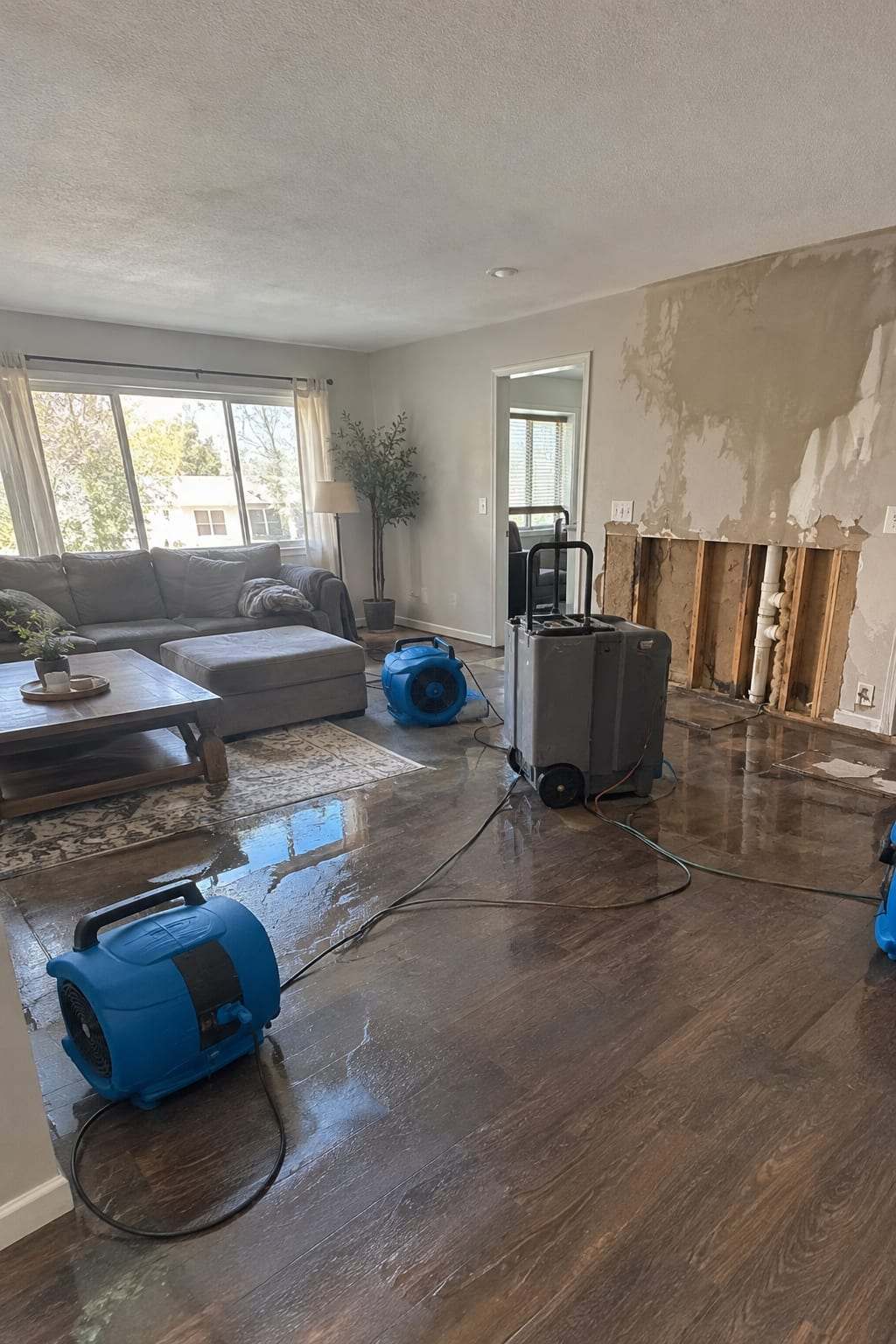
Step 01 · before anything else
Close the main
Clockwise until it stops. Can't turn it? Denver Water can shut off at the curb.
-
01
Close the main valve
Usually where the water line enters the house, near the meter, in a basement or crawlspace. Turn it clockwise until it stops.
-
02
Make wet rooms safe
Flip breakers for wet rooms from a dry spot. Stay out from under a ceiling that sags or bulges.
-
03
Bring in the right help
A licensed plumber for the pipe. A restoration company you've checked if floors, walls or ceilings got wet. Call 911 if anyone is hurt.
No phone line or request form is connected. Draft preview. “Denver Burst Pipe Damage” is a working name for this website, not a registered or verified business, and it is not affiliated with any other company. No calls, messages or form requests are accepted until an operator, service area and contact details are verified. No phone line yet: read why
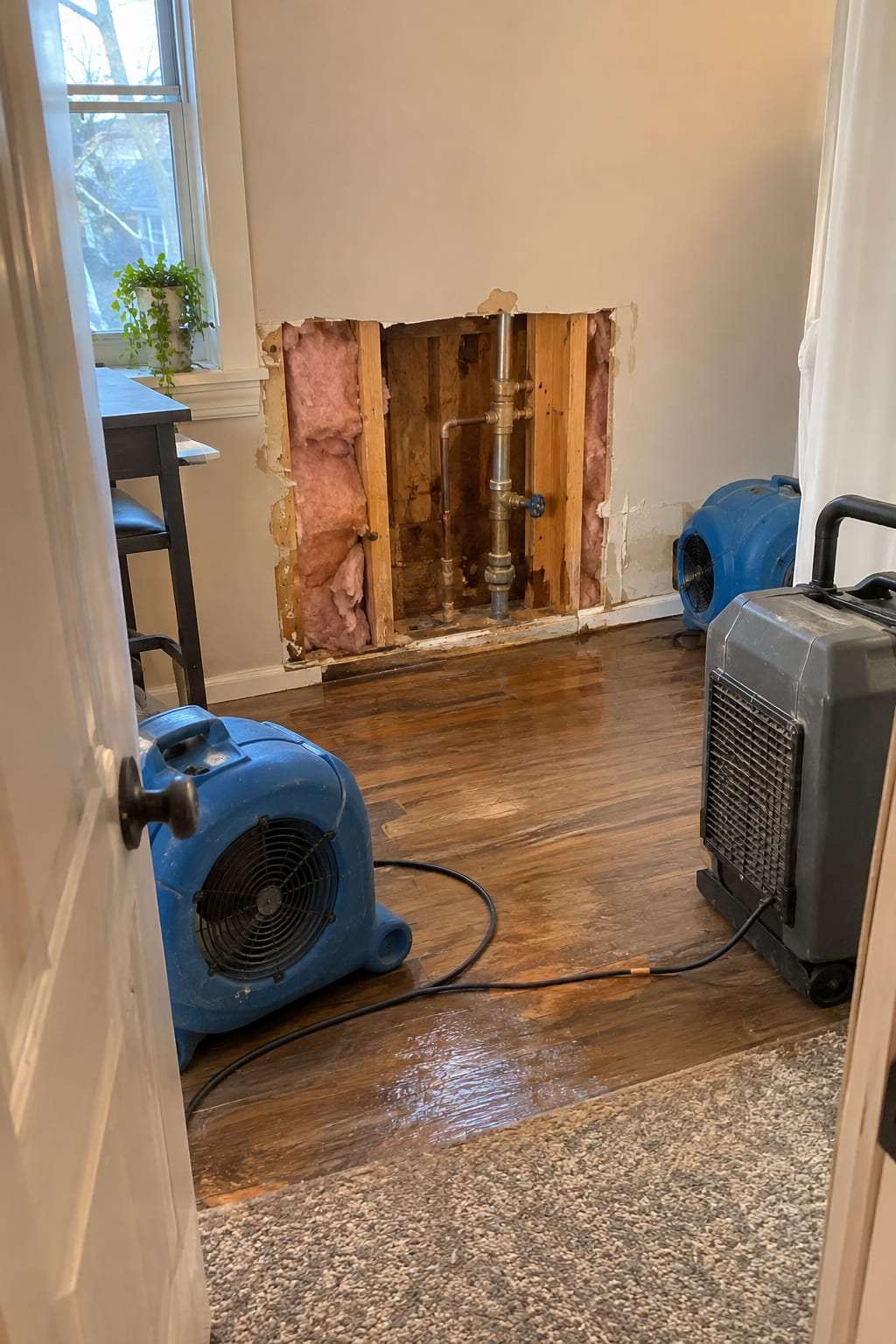
Where it ends up
The water goes farther than the break
A supply line runs at full household pressure, so a split pipe doesn't drip. It pours, and it keeps pouring until a valve closes. The water follows gravity and framing: across the subfloor, down wall cavities, through the ceiling of the room below.
Most responses come in three parts. Pull out the standing and absorbed water. Cut out what can't be dried. Dry the rest and prove it with moisture readings. Ask which equipment is coming (extraction units, air movers, dehumidifiers, moisture meters) and who will run it.
What to look for
Most pipe damage happens out of sight
-
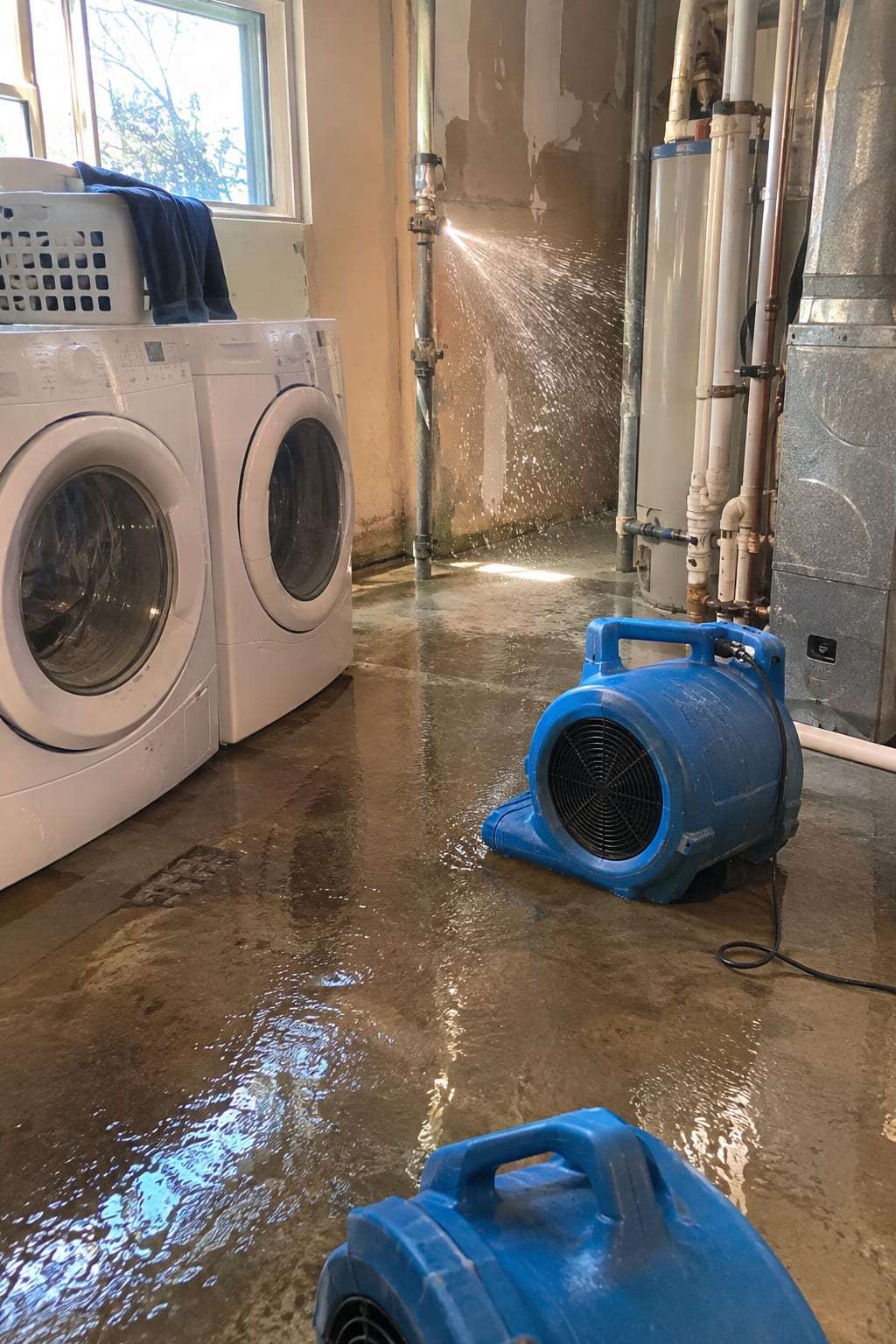
The break is rarely where the water shows Corroded fittings inside a wall can leak for weeks before a stain appears on the other side.
-
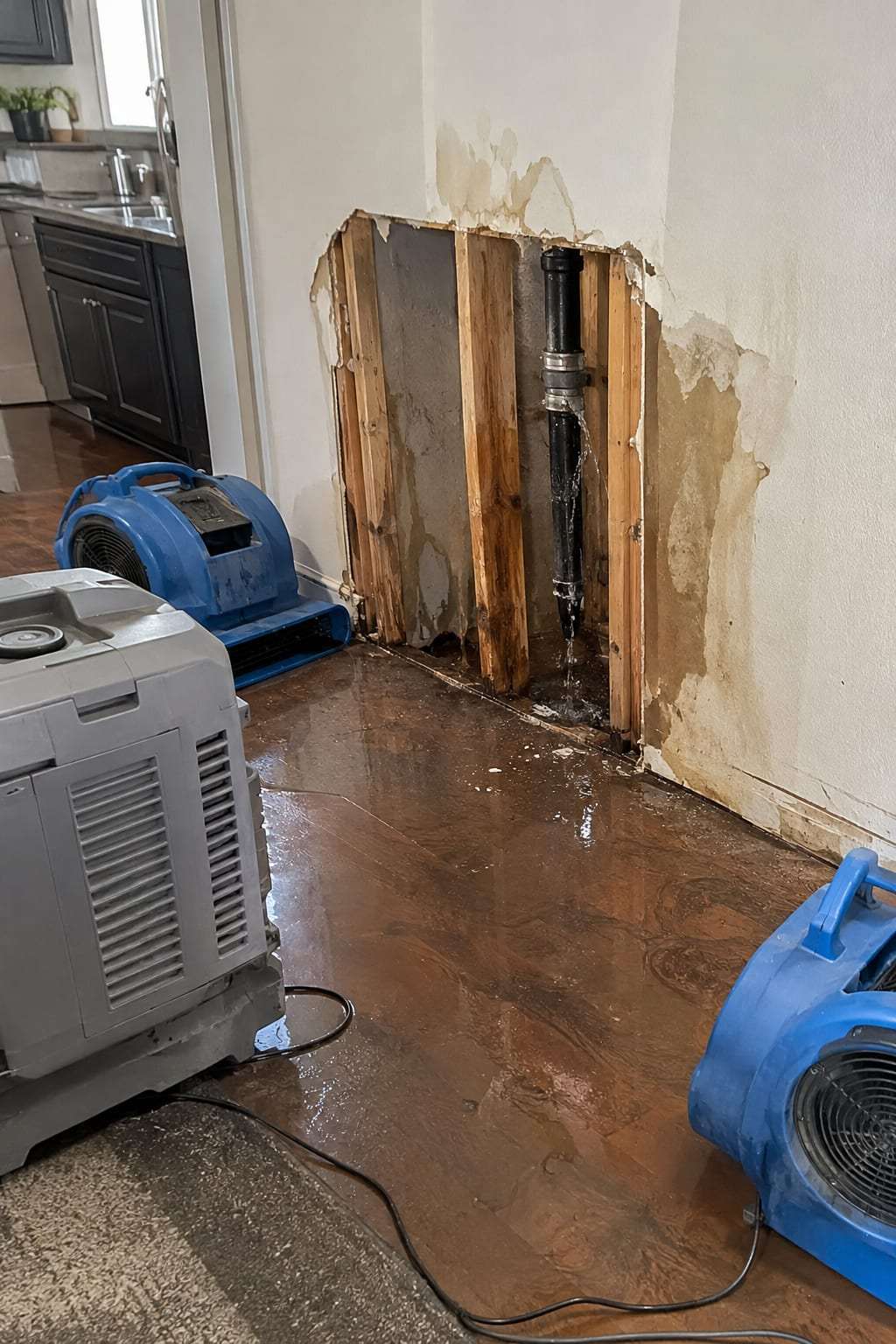
Wet drywall reads cold A thermal camera shows evaporating water as a cool patch. A moisture meter confirms it.
-
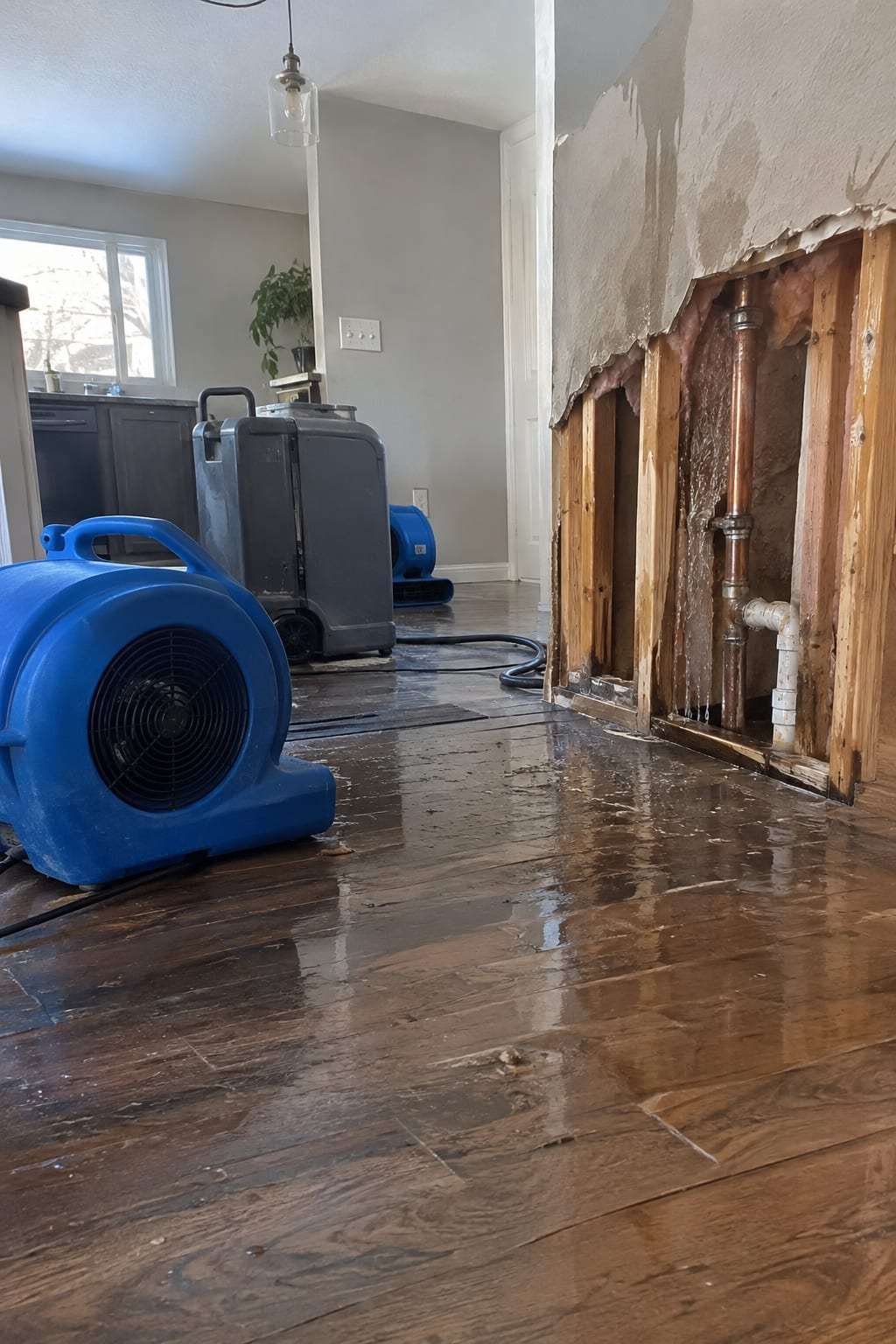
Opening a wall is a diagnosis A small inspection cut shows how far the water traveled and whether insulation has to come out.
-
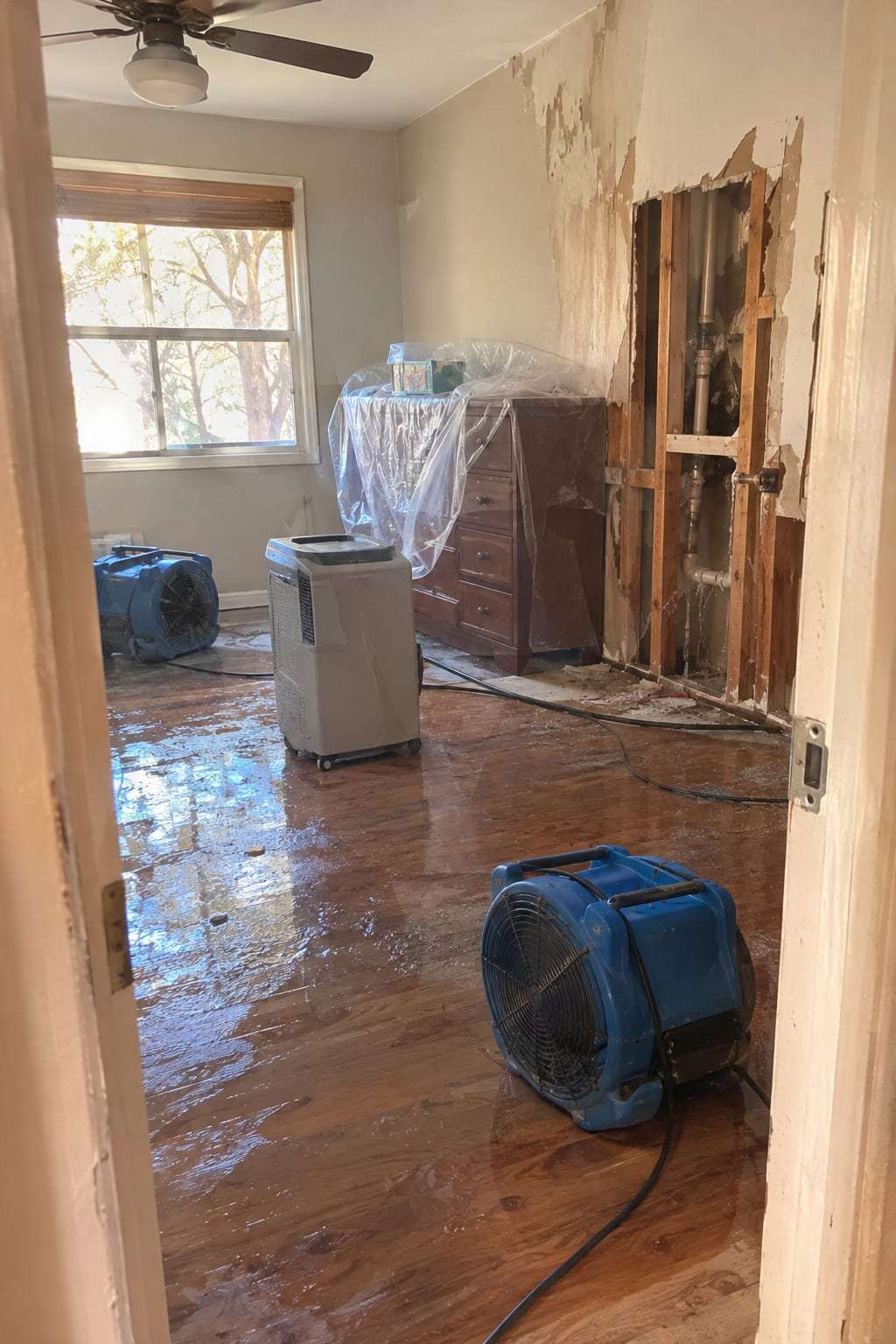
Subfloors hold water longest Water that soaks into wood under the flooring needs its own drying plan and its own readings.
Checklist
The first ten minutes
- 01 Close the main shutoff. Can't find it or turn it? Call your water provider (Denver Water serves most of the city) about a shutoff at the curb.
- 02 Cut power to wet rooms at the breaker, but only if the panel is dry and you can reach it without standing in water.
- 03 Open a faucet on the lowest floor to bleed off the pressure still in the pipes.
- 04 Carry what you can out of the water, then photograph everything before it changes.
- 05 Call a licensed plumber for the pipe. If floors, walls or ceilings got wet, call a restoration company you've checked.
Usual suspects
Five ways Denver pipes give out
- A Supply lines in exterior walls, garages and crawlspaces that freeze and split in a cold snap.
- B Galvanized steel and early copper that wear through from the inside into pinhole leaks.
- C Compression fittings and braided supply lines under sinks and toilets that let go without warning.
- D Lines in vacant or seasonal properties where the heat was turned down too far.
- E Fire sprinkler branches in commercial and multifamily buildings, especially in unheated stairwells and attics.
Local conditions
Why Denver pipes split
Most Denver winters are mild enough to forget about. Then an arctic front settles over the Front Range and holds temperatures below zero for days. That is when pipes in exterior walls, unheated garages, crawlspaces and attics freeze. Plenty of the city's housing, from Victorian rowhouses to 1920s bungalows to post-war ranches, runs plumbing through spaces that were never insulated for it.
Age is the other half. Galvanized steel corrodes from the inside out, and some early copper wears thin into pinholes. A licensed plumber can tell you which you have. A restoration company handles the water once one fails.
Before the next cold snap
- 01 Ask any company to confirm your Denver address is inside its service area.
- 02 Find your main shutoff before winter, and make sure it actually turns.
- 03 In a cold snap, open the cabinet doors on exterior walls and let a faucet drip.
- 04 Few restoration companies have an office in every neighborhood. Ask about arrival time before you commit.
The response
How the response usually runs
Two goals: get the water out fast, and leave a paper trail your insurer can follow.
-
Stage 01
First call
Expect questions about where the pipe broke, whether the water is off, and which rooms are wet.
-
Stage 02
Moisture assessment
Technicians confirm the water is off, then do moisture mapping with meters and thermal cameras, often well past what looks wet.
-
Stage 03
Extraction
Standing water comes out first, then the water held in carpet, pad and subfloor.
-
Stage 04
Drying
Air movers and dehumidifiers go in, with drying mats for hardwood floor restoration. Readings get logged until each material reaches its dry target.
-
Stage 05
Restoration
Repairs start once the structure reads dry. Closing up a wet wall seals the problem inside.
Two different jobs
Plumber or restoration company?
They fix different problems. A burst pipe in a finished home usually needs both, often on the same day.
Fixes the pipe
A licensed plumber
- 01Finds and repairs or replaces the failed pipe or fitting
- 02Thaws frozen lines and checks the rest of the run for weak spots
- 03Turns the water back on and confirms it holds
Fixes the building
A restoration company
- 01Moisture assessment and moisture mapping with meters and thermal cameras
- 02Extracts standing water and the water trapped in carpet and pad
- 03Structural drying with air movers and dehumidifiers, plus hardwood floor restoration where boards cupped
- 04Removes what can't be dried and documents it for the insurer
Go deeper on burst pipes
Guides, checklists and neighborhood notes on frozen lines, shutoffs, moisture mapping and drying.
- Water Damage
One problem per page.
- Checklists
Pull one up after a pipe fails, or before the next cold snap.
- Neighborhoods
A frozen line in an 1890s Highland house is a different problem from a failed fitting in a 2010s Central Park townhome.
Before you call anyone
What a good first call covers
Expect three questions: is the water off, where did the pipe break, and which rooms are wet. Then ask yours: who is coming and roughly when, and will you get photos, moisture readings and an itemized estimate. Many insurers work from Xactimate line items. The insurer, not the contractor, decides coverage.
Have these answers ready
- 01 Is the water off? If not, where is the main shutoff and can you reach it?
- 02 Where did the pipe fail, and is the water clean (supply line) or dirty (drain or sewer)?
- 03 Which rooms and floors are wet, and is water coming through a ceiling?
- 04 How long has it been leaking, as far as you know?
- 05 Is power off to wet areas? Is anyone in the home at risk?
- 06 Do you own or rent? Is there an HOA or property manager?
Describe the burst pipe
This form is not connected. This website is a draft preview: no business has been confirmed to receive requests, so the fields below are switched off and nothing can be sent. In an emergency, call 911.
Pipe just burst? Start at the valve.
Close the main, make wet rooms safe, photograph everything and call your insurer. Then bring in a plumber and a restoration company you've checked. Call 911 if anyone is hurt or a ceiling is sagging.
FAQs
Frequently Asked Questions
Before you hire anyone
Ask who will arrive and roughly when, whether employees or subcontractors do the work, and whether the technicians hold IICRC certification for water damage.
Before anyone starts, ask whether the company's own employees or subcontractors will do the work.
Read all FAQsA pipe just burst in my Denver house. What do I do first?
Close the main water valve. Cut power to wet rooms if the panel is dry and safe to reach. Move what you can, take photos, then call for help. Keep out of water near outlets and appliances.
Is burst pipe damage covered by insurance?
A sudden burst is often covered, but policies vary. Freeze damage in an unheated or vacant home may be excluded. Your insurer makes the call, so read the policy and ask your adjuster.
How many days until the walls and floors are dry again?
Many clean-water losses take several days. Water inside walls, under hardwood or across more than one floor takes longer. Moisture readings, not the calendar, say when drying is done.
Do I need a plumber too?
Yes. The plumber fixes the pipe. The restoration company removes the water and dries the structure. Many bursts need both on the same day.
Can wet drywall be saved?
Drywall soaked with clean water can often be dried if work starts fast. Drywall that sags, crumbles or stayed wet for a long stretch usually gets cut out.
Will a restoration company answer at night?
Many advertise round-the-clock phones. Ask whether the call reaches their own staff or an answering service, and how soon someone can realistically be there.
Do I call a plumber or a restoration company first?
Close the water first. That stops the damage no matter who comes. If water soaked into floors, walls or ceilings, call both: the plumber repairs the pipe, and the restoration company extracts water and dries the structure. If only the pipe broke and nothing got wet, a plumber alone is enough.
Will a call center take my info and nobody shows up?
Ask whether requests go to the company's own staff or an answering service, then ask who is coming and roughly when.
Am I signing away my insurance claim?
Ask what each document does before you sign. Work should be documented in an estimate, authorization, or written scope, and the insurer decides coverage.
Will equipment stay longer than needed?
Ask for the moisture readings that show drying is progressing; equipment should come out when materials are dry.
Who can shut off my water?
If you can't close the main, contact your water provider; for most of Denver that's Denver Water, which can shut off at the curb stop.
Will I get photos for my claim?
Ask for photos and moisture readings from the first visit onward.
Area covered by this guide
ZIP codes served: 80203 (Denver), 80218 (Denver), 80202 (Denver), 80205 (Denver), 80206 (Denver), 80204 (Denver), 80209 (Denver), 80211 (Denver), 80223 (Denver), 80216 (Denver), 80220 (Denver), 80246 (Denver), 80207 (Denver), 80212 (Denver), 80219 (Denver), 80210 (Denver), 80230 (Denver), 80224 (Denver), 80222 (Denver), 80266 (Denver), 80238 (Denver), 80247 (Denver), 80236 (Denver), 80231 (Denver), 80237 (Denver), 80235 (Denver), 80239 (Denver), 80249 (Denver).
Also nearby: 80214, 80221, 80226, 80010, 80232, 80110, 80113, 80033, 80030, 80215, 80003, 80002, 80045, 80227, 80014, 80123.