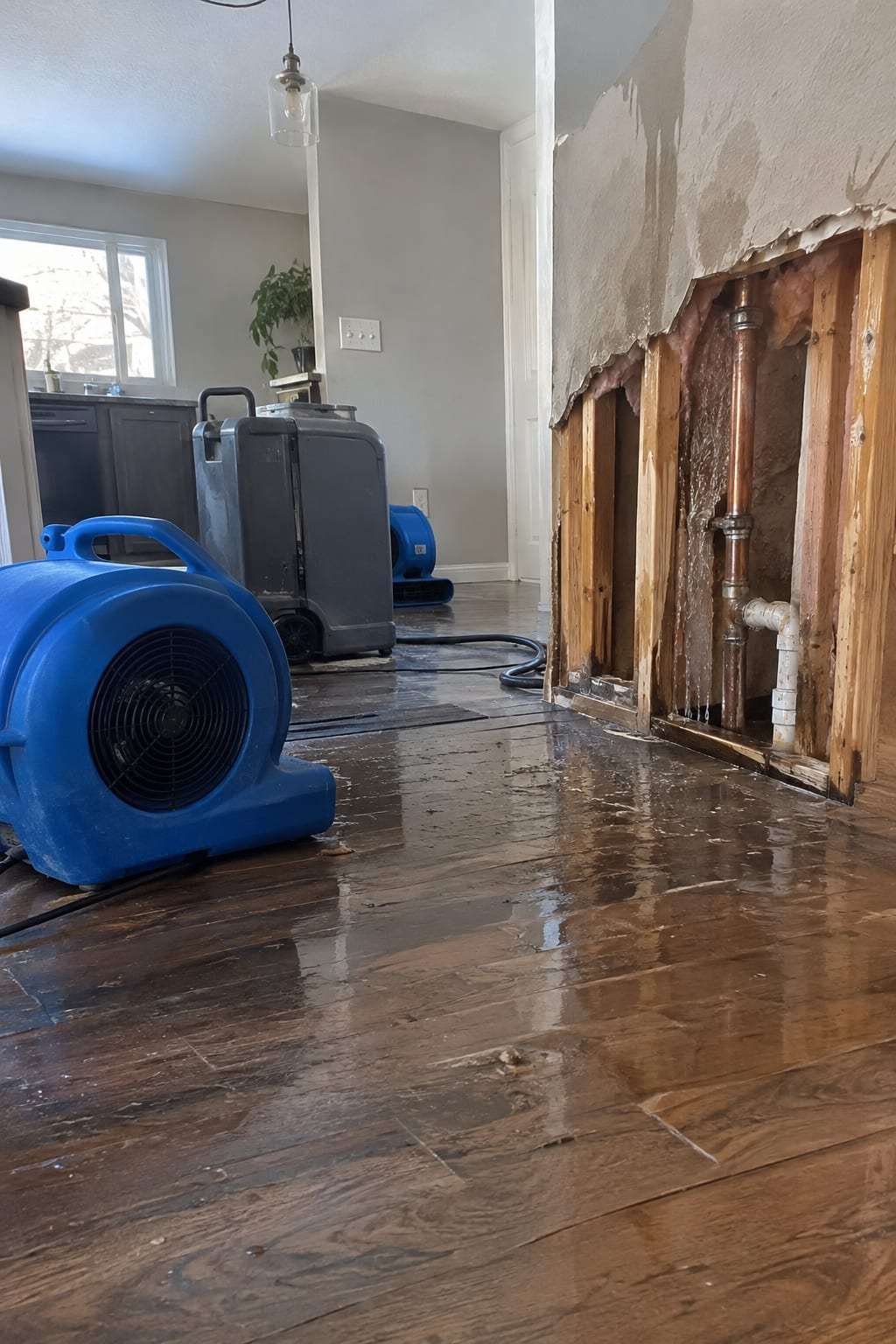
How plaster reacts to water
Traditional plaster is applied in layers over strips of wood lath, with some plaster pushed through the gaps to form keys that hold the wall in place. When water from a burst line soaks it, the plaster itself often survives, because it does not turn to mush the way the gypsum core and paper facing of drywall can. The weak points are the keys and the lath. Wet wood lath swells, and when it dries it can shrink and loosen, letting sections of plaster pull away.
Ceilings are the bigger concern. A plaster ceiling that has lost its keys can drop in heavy slabs. Signs include sagging, a hollow sound when tapped gently, and cracks that widen or form a rough circle. Walls usually fail less dramatically but can bulge or crumble along the base where water collected.
Plaster also dries slowly. It is dense, and in older homes it may be covered with layers of paint, including oil-based coats, that slow evaporation. Moisture readings matter more than how dry the surface feels.
Plaster and drywall after the same leak
| Plaster over lath | Gypsum drywall |
|---|---|
| Hard surface often stays intact when wet | Softens and sags when saturated |
| Lath can swell, then loosen keys as it dries | Paper facing can grow mold if left wet |
| Ceilings can fail in large, heavy pieces | Cut-outs and replacement are routine |
| Dries slowly; may need longer equipment time | Dries faster when cavities are opened |
| Patching often needs a plaster-experienced trade | Standard materials and finishes |
Before deciding to keep or remove wet plaster
- Map moisture across the whole wall or ceiling, not just the stain
- Tap gently to listen for hollow, detached areas
- Check for cracks that are growing over hours
- Ask whether drilling small holes to vent the cavity is an option instead of full removal
- Test paint for lead and plaster or texture for asbestos before demolition in older homes
- Photograph decorative plaster, moldings or ceiling medallions before work begins
- Find out whether your insurer will pay for plaster repair or only drywall replacement
General information for Denver, not a quote or professional advice. In an emergency, call 911.